


- The tests confirm the importance of the 6 GHz band, considered the last mid-band spectrum opportunity to provide future mobile services. It offers high capacity and coverage comparable to that of the 3.5 GHz band, thanks to innovations such as Nokia’s active antenna solutions.
- The pilot was carried out on the campus of the Universitat Politècnica de València (UPV) and involved adapting the 5G holographic lab, a European benchmark in advanced connectivity technology research.
- This initiative strengthens Spain’s leadership in developing the future 6G network and consolidates collaboration between industry and academia to drive immersive applications, artificial intelligence, and new digital experiences.
Telefónica, Nokia, and the iTEAM of the Universitat Politècnica de València (UPV) have taken a new step in the evolution of mobile communications through a pilot conducted in the upper part of the 6 GHz band (6.425–7.125 GHz, 3GPP n104). This band is considered key by major European telecom operators, including Telefónica, to secure the future of digital mobile connectivity in Europe and enable the launch of next-generation services.
This technological milestone took place in the 5G holographic lab, jointly created by Telefónica, Nokia, and the UPV’s iTEAM research institute at the Vera Campus. It is a pioneering environment in Europe for experimenting with advanced wireless technologies and their applications. The lab serves as a testbed for 6G use cases, including immersive communications such as extended reality and holography.
The 6 GHz band is crucial to ensuring the future of connectivity in Europe. It enables next-generation services by offering greater capacity, speed, and efficiency in network deployment than the main 5G band (3.5 GHz). For this reason, the 6 GHz band represents the last available spectrum opportunity to launch future 6G networks while continuing to enhance 5G development.
The 6 GHz band will leverage active antennas with higher-order massive MIMO (i.e., a larger number of transmit and receive antennas) than those used at 3.5 GHz. These antennas can focus the signal and maintain coverage in urban and suburban environments while significantly increasing network capacity. This compensates for the higher propagation loss caused by the higher frequency. This combination of greater capacity and efficient coverage makes the 6 GHz band the only viable opportunity to launch 6G in Europe within a band not currently used by previous mobile generations.
Pilot results
During the test, state-of-the-art equipment was used, including an active antenna with Nokia’s massive MIMO capabilities. The results demonstrated that this band can provide coverage comparable to the 3.5 GHz band, using existing base station sites, significantly increasing traffic density through efficient network deployment, and delivering the performance required for future next-generation services.
With this test, Telefónica, Nokia, and UPV reaffirm their commitment to technological development for the benefit of the economy and society in Spain and Europe.
Gerardo Rovira, Director of Mobile Access and Network Core at Telefónica Spain, stated: “This pilot marks a milestone in next-generation network research. Spain is once again at the technological forefront, demonstrating that the 6 GHz band will not only meet the growing demand for data in the most efficient way but is also critical to securing spectrum for the future launch of 6G.”
Álvaro Sánchez, Head of Business at Nokia, said: “The availability of the full 6 GHz band opens the door to a new era in mobile connectivity. This proof of concept confirms that 6G can be efficiently deployed in the 6 GHz band, driving digital connectivity in Spain and enabling the networks and services of the future.”
David Gómez-Barquero, UPV professor, Deputy Director of iTEAM, and head of the lab, explained: “The iTEAM-UPV 5G holographic lab is now a European reference for validating immersive applications, one of the most promising use cases for future 6G. Thanks to this collaboration, our lab, located in the City of Innovation, is becoming a key infrastructure for future 6G communications and one of the world’s first testbeds for this technology.”
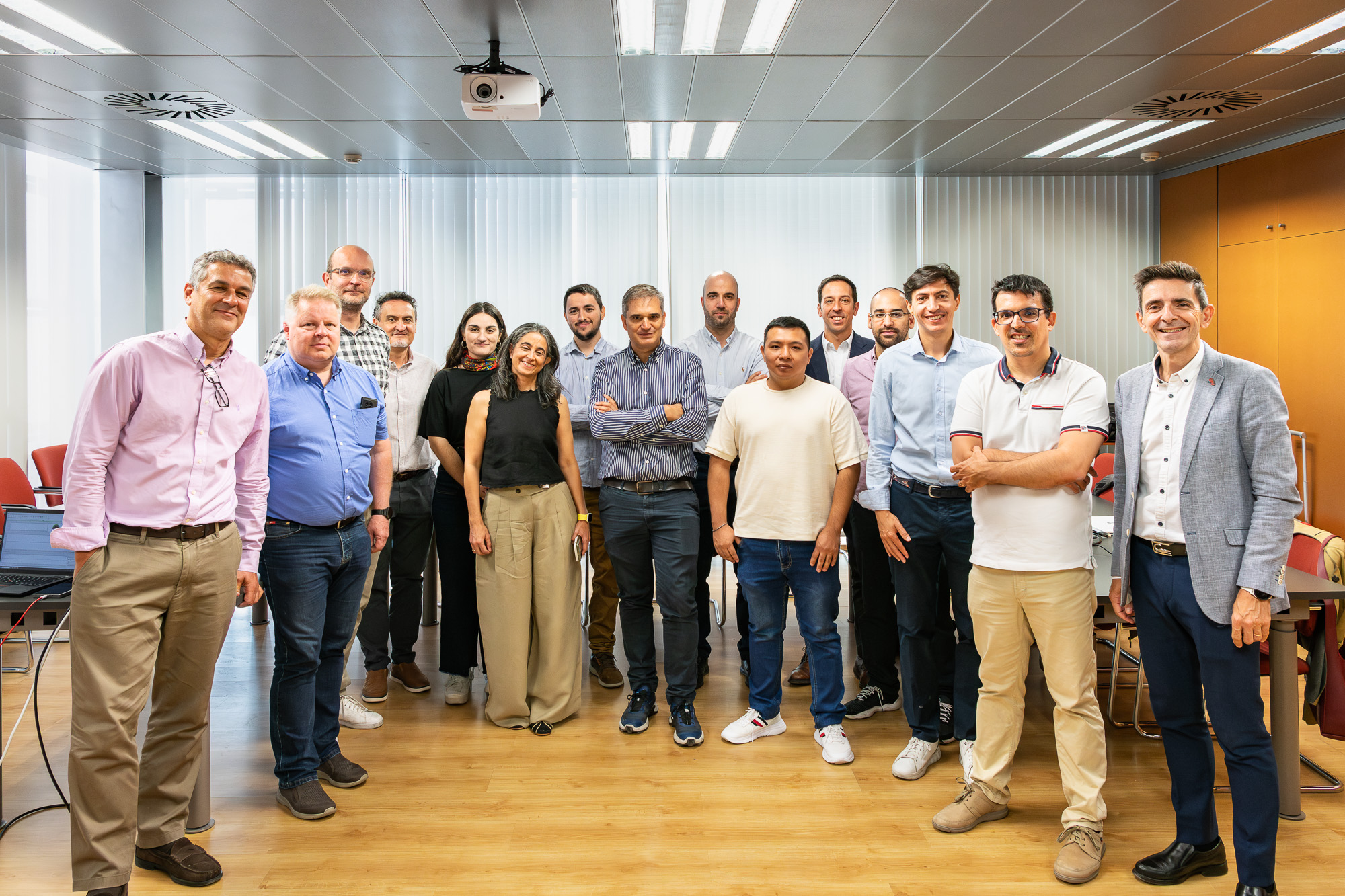
Part of the team from the European IMAGINE-B5G project, under the Smart Networks and Services (SNS) program (Grant ID 101096452), in which UPV, Nokia, and Telefónica participate, also collaborated in this pilot.