


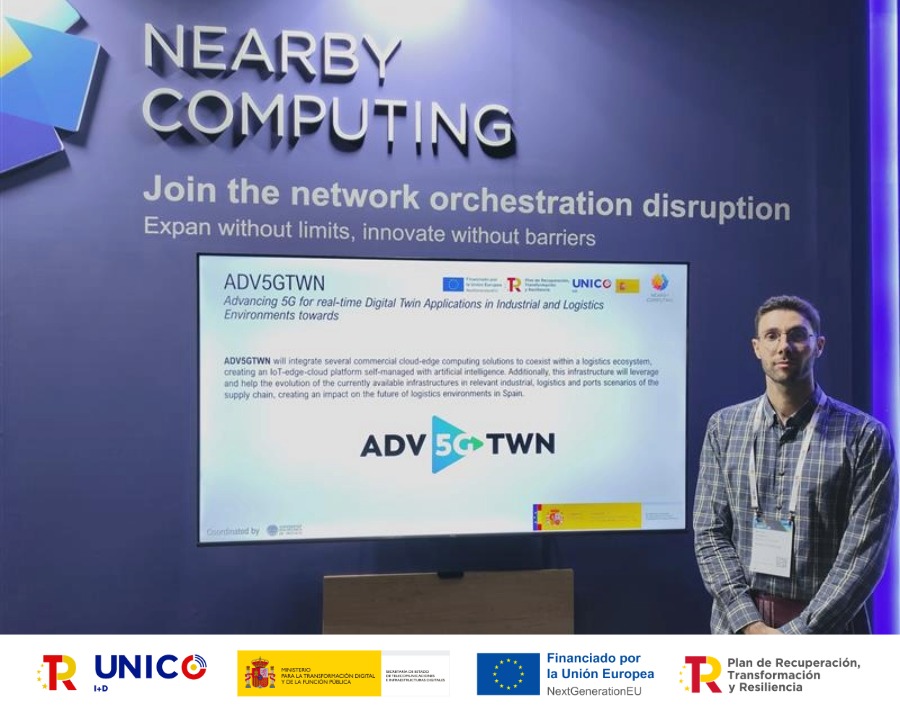
Nearby Computing and the Institute of Telecommunications and Multimedia Applications (iTEAM) at the Universitat Politècnica de València (UPV) have announced a strategic alliance to develop an advanced computing resource orchestration system applied to digital twins in port environments.
The goal of this agreement is to optimize the dynamic management of distributed computing infrastructures (from IoT and edge to the cloud) that enable real-time operation of digital twins, strengthening the technological competitiveness and sustainability of the smart ports of the future.
A Pioneering Project in IoT–Edge–Cloud Orchestration
The project involves the design, implementation, deployment, and validation of an IoT–edge–cloud orchestration platform capable of dynamically managing computing resources, applications, and 5G connectivity solutions located in the cloud or at the edge.
Among its main features are load optimization, automatic scalability, and real-time monitoring of the entire infrastructure, both in industrial environments and in critical infrastructures.
Key Work Areas
- Distributed and Dynamic Architecture: Development of an advanced orchestration architecture that coordinates computational resources and applications across all infrastructure levels. The central component of this design is NearbyOne, Nearby Computing’s modular orchestration platform.
- Artificial Intelligence for Orchestration: Implementation of AI-based algorithms capable of autonomously self-configuring and managing the system’s resources and applications.
- Monitoring and Operational Efficiency: Integration of advanced monitoring mechanisms that evaluate infrastructure and application KPIs (computing capacity, latency, response time), identifying bottlenecks and automatically reconfiguring resources.
- Sustainability and Energy Efficiency: Comprehensive analysis of the energy consumption of the IoT–edge–cloud infrastructure—from edge nodes deployed in the port to cloud nodes—and design of innovative mechanisms for reducing it.
Statements from Project Leaders
“This project marks a milestone in the application of advanced orchestration technologies to port environments,” said Prof. David Gómez-Barquero, Deputy Director of Research at iTEAM-UPV. “It allows us to combine academic knowledge with Nearby Computing’s technological capabilities to advance the digitalization and sustainability of the maritime-port sector.”
Dr. Angelos Antonopoulos, Director of Innovation at Nearby Computing, added:
“This collaboration allows us to move toward a smarter, more connected, and more sustainable port infrastructure, where resource orchestration becomes an essential tool for real-time decision-making.”
Duration and Funding
The project activities, with an estimated duration of 24 months, are being carried out within the framework of “Avanzando-5G-Digital Twins,” an initiative funded by the UNICO I+D 5G Plan under Spain’s Recovery, Transformation and Resilience Plan, financed by the Ministry for Digital Transformation and the Civil Service with funds from the European Union – NextGenerationEU, specifically under the project Avanzando-5G-Digital Twins, 5G-IoT Platform with Edge and Cloud Computing (TSI-063000-2021-112).
This plan aims to strengthen collaboration between universities and technology companies, promoting Spain’s position as a leader in digital innovation.
This project will lay the foundations for a new generation of smart ports, where digital twins become a strategic tool for predictive, efficient, and sustainable port operations management.
Thanks to the intelligent resource orchestration developed by Nearby Computing and iTEAM–UPV, ports will be able to respond in real time to any operational changes, optimize the use of technological and energy infrastructures, and enhance data-driven decision-making.
Ultimately, this collaboration will accelerate the digital transformation of the Spanish port ecosystem, providing it with greater autonomy, resilience, and international competitiveness.